Search and Rescue Dogs 101

So you are interested in becoming a Search and Rescue (SAR) K9 handler or part of a SAR K9 team, great! I’ve noticed that there isn’t much information or direction on the internet, so I wanted to write a brief article to help you take a step in the right direction. Because every SAR chapter has different standards and requirements, I am not going to attempt to guide you through the actual process. My goal here is to guide you in the right direction so that you can decide what type of SAR dog you want to train, are looking at having trained , and/or want to handle. In a nutshell, there are 4 different types of SAR dogs. These four types are the tracking/trailing dog, USAR or disaster dog, wilderness or air Scent dog and the HRD or cadaver dog.

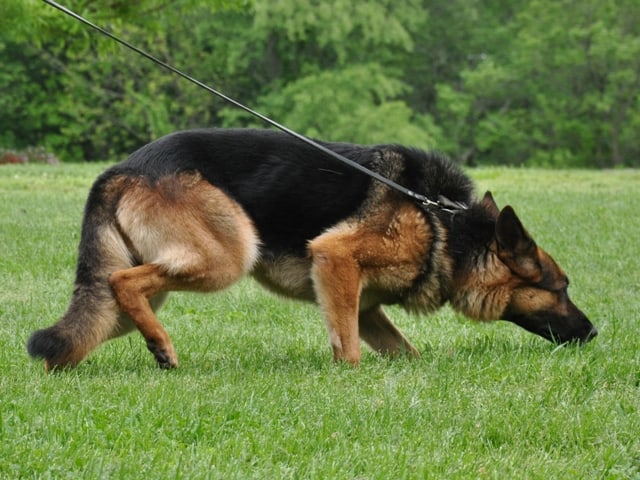
Tracking or Trailing Dog – It is common for people to use tracking and trailing synonymously. This is a common misconception among people learning about tracking or trailing work. In actuality, they are two completely different methods and have two completely different uses. The reason we use both words to describe them here is in the event someone is looking for a SAR trailing dog, but accidently wrote SAR tracking dog. Tracking is a method used in many sports like Schutzhund or AKC competitions. This is a very slow and ineffective way for SAR groups to work. Here, the dog actually follows each footstep of the track layer. They are taught to keep their nose on the ground so they do not miss a footstep and can indicate on a scent article.

As for the Search and Rescue trailing dog this is the fastest and most effective way to trail a person when you know their last known location or have a scent article. Here, the dog is taught to follow the scent, not the track of the human it is following. It is taught scent discrimination so it does not pick up a new scent somewhere along the track and follow it instead. It is also taught to work through contamination along the trail like vehicles, other people, animals and other distractions. You will often see a dog with his nose held up, walking fast or running during a trail. It is the handlers job to ensure that the dog is working at all times and is on the right trail. This type of trailing is typically done on a 30 or 50 foot long line or leash so the handler can keep up with the dog. This dog is by far the most common and most often used Search and Rescue dog out there.

USAR (Urban Search and Rescue) or Disaster Dog – This dog is similar to a life insurance policy…you pay into it each month but hope that you don’t have to use it in the near future. What I mean by this is that the Urban Search and Rescue or Disaster Dog is used very rarely. We typically refer to them as disaster dogs because they are used after hurricanes, tsunamis, tornados, flash floods, acts of terrorism, etc. These dogs are taught to find living humans in difficult terrain, i.e. a pile of rubble, a collapsed building, rooftops, etc. This dog not only understands the fundamentals of finding the human, but also has the agility training to move himself to the location to show a final indication. These are the dogs that were used during the 911 tragedy, the Oklahoma City bombing and most recently in Haiti and Chile. These dogs are extremely valuable when it comes to disasters but a typical USAR dog may only work once in its life.

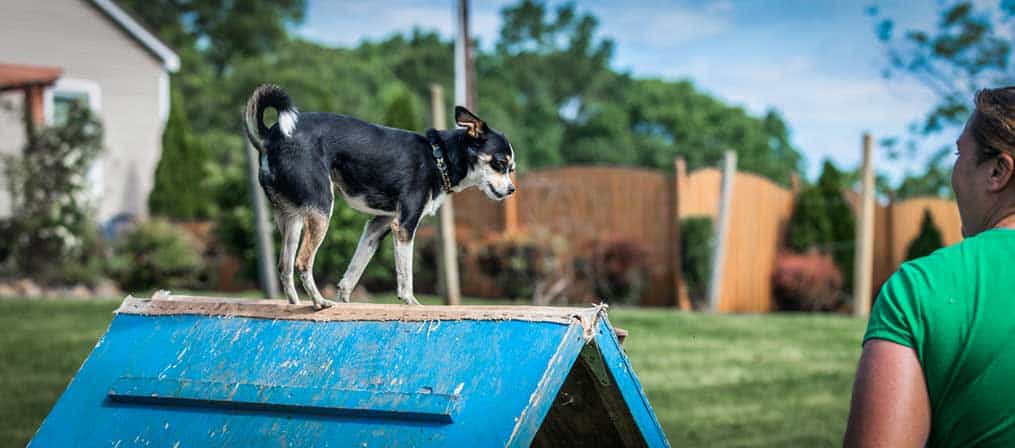
Wilderness or Air Scent Dog – These dogs have not only mastered on and off leash obedience, but have the ability to be set free in the woods to locate a human in large or rough terrain. These dogs are often times used to search larger areas where no last know location has been given. Once they pick up the scent they tend to zigzag back and forth creating a cone shape until they eventually find the source of the odor, the missing person. They are most commonly used to find a missing person in the wilderness or someone lost on terrain which would be hard for an individual to navigate through. These dogs are also highly skillful at agility so they can move quickly, smoothly and fluently while locating someone.

HRD or Cadaver Dog – Human Remains Detection or Cadaver dogs are usually brought in last during a Search and Rescue operation. These dogs are trained to find and indicate on a number of decomposing human odors. Whether it is decomposition fluid, hair, teeth, blood, tissue or nails the dog is always looking for someone who has died. HRD dogs are taught on and off leash obedience, plus directionals which help the handler control their search pattern from a distance and in rough terrain. The most popular HRD dog is a land cadaver dog. This dog is trained to indicate when it has found a body (or part) regardless if it is visible or not on the land. A water dog will indicate on odors of a body under water while riding in a boat or similar vessel.
Although it has been done, we do not suggest training a dog to find live humans and cadavers. It has been seen throughout history that when presented with a situation where it is presented with both live people and cadavers it has been extremely easy for them to get confused and indicate on the wrong thing. For instance, during 911 dual trained cadaver/USAR were used to find living humans. They wanted to spend as much time trying to save the individuals still alive as possible. So when the dog indicated, they assumed the person was alive and spent a large amount of energy trying to save them, only to find out they had been dead for hours or days. So that is why we don’t suggest it.

It is easy to write an essay on each one of these categories of Search and Rescue dogs, but it is important to understand the fundamental differences between them. Knowing what each is will only help you decide which route you and your pup want to go when joining a SAR Chapter. Here at Highland Canine we pride ourselves in producing some of the finest SAR dogs in the industry. Call today to schedule an evaluation to see if your dog is capable of becoming a Search and Rescue dog or if you were looking to purchase a dog already trained.

CNN Article on Scent Lineups

I recently saw an article which raised questions about scent line-ups conducted by police dogs. This article was brought to my attention by a friend who had some questions about the article and video that they saw, based on the fact that they encounter these line-ups in their work. Below is the video of the actual lineup that was conducted and later proven to be faulty. Later, in this article, I want to discuss how, in my opinion these line-ups can be improved to better serve law enforcement.

K9 Containment Video

Highland Canine Training, LLC is now offering a great new roll call video to teach patrol officers, supervisors and other personnel how tracking and trailing dogs work as well as how to properly establish an effective perimeter to increase the odds of apprehending fleeing criminal suspects.

This production outlines:
• Basic principles of scent
• What affects odor and tracking conditions
• How tracking and trailing dogs work
• Psychological profiles of fleeing suspects
• What officers should do on a perimeter
• Proper containment techniques

Proper response and containment is the only effective method of catching fleeing criminals with a police canine. This video explains the role of the perimeter and containment officers to ensure the best possibility of capturing fleeing suspects. The methods and techniques explained in this video have been successfully utilized by departments across the country and have been shown to drastically increase the success rate of their police canine tracking and trailing teams.

High Quality DVD- Approximate run time 11 minutes- this training video is a must have for every police team that wants to apprehend criminals and get the most of their K-9 teams. Available for $14.95 plus shipping and handling. Order your copy by clicking here